Saturday, March 19, 2011

James Carr - You Got My Mind Messed Up (1967)


Listen
Buy

For fans of: Otis Redding, James Brown, Aretha Franklin

James Carr has a great voice and singing style, one that is undoubtedly classic. With the unfaltering rhythms behind him, this is a greatly powerful and enjoyable listen. I can't help but feel a bit happier when listening to this. I'm not a lyrical person, but the songs here somehow make everyday life seem much more worthwhile, and I'm left with a better perspective on tomorrow. - Matthew Foster

"If ever there was a soul singer who rivaled Otis Redding's raw, deep emotional sensuality, it was James Carr, and the proof is in the pudding with You Got My Mind Messed Up. Carr was one of the last country-soul singers to approach any chart given to him as if it was a gift from God. Carr was Redding's rival in every respect if for no other reason than the release of this, his debut album recorded in 1966. The 12 songs here, many of them covered by other artists, are all soul classics merely by their having been sung and recorded by Carr. Among them is the Drew Baker/Dani McCormick smash "Pouring Water on a Drowning Man," George Jackson's "Coming Back to Me Baby," a handful of tracks by O.B. McLinton, including "Forgetting You" and the title track, and the Chips Moman/Dan Penn hit "Dark End of the Street." And while it's true that few have ever done bad versions of the song because of the phenomenal writing, there is only one definitive version, and that one belongs to Carr. In his version he sings from the territory of a heart that is already broken but enslaved both to his regret and his desire. This is a love so pure it can only have been illicit. When he gets to the beginning of the second verse, and intones "I know time is gonna take its toll," he's already at the end of his rope; he knows that desire that burns like this can only bring about ruin and disaster, and it is precisely since it cannot be avoided that his repentance is perhaps accepted by the powers that would try him and judge him. He holds the arrangement at bay, and unlike some versions, Carr keeps his composure, making it a true song of regret, remorse, and a love so forbidden yet so faithful that it is worth risking not only disgrace and destruction for, but also hell itself. As the guitar cascades down the fretboard staccato, he can see the dark end of the street and holds it as close to his heart as a sacred and secret memory. By the album's end with the title track, listeners hear the totality of the force of Memphis soul. With Steve Cropper's guitar filling the space in the background, Carr offers a chilling portrait of what would happen to him in the future. Again pleading with the beloved in a tone reminiscent of a church-singer hell, he's in the church of love. He pleads, admonishes, begs, and finally confirms that the end of this love is his insanity, which was a chilling prophecy given what happened to Carr some years later. This is one of theMemphis soul records of the mid-'60s, full of rough-hewn grace, passion, tenderness, and danger. A masterpiece." - AMG

Friday, February 25, 2011

Colin Stetson - New History Warfare Vol. 2: Judges (2011)


Listen
Buy

For fans of: Supersilent, Land of Kush, Barry Guy

Colin Stetson uses a bass saxophone in a way somewhat similar to Albert Ayler on Spiritual Unity, although this is 2011, and the music here is far from mid-60s avant-free jazz. There's a lot of extra-saxular sound, not in the form of drums or piano, but in the form of noisy electronics (I think) and vocals provided by artists such as Laurie Anderson. Most of the tracks put Stetson's incredible sax playing to the front, but several of them are more like electronic drones with interesting layers and rhythms. I don't think I've ever heard anything quite like this album, and while my jaunts into experimental music often leave me uninterested, this one does not. If you enjoy both avant-jazz and noisy modern electronic music, this is highly recommended. - Matthew Foster

"Colin Stetson's 2008 album New History Warfare, Vol. 1 showcased the saxophonist/multi-reedist's phenomenal multiphonic improvisation style and circular breathing technique. Released in 2011, New History Warfare, Vol. 2: Judges features a similar exploratory solo saxophone approach that is nothing short of mind-blowing. Stetson uses the circular breathing style, recorded in single takes and occasionally with overdubs, to create atmospheric and hypnotic loops that sound like layered analog keyboards more than saxophones. In that sense, the tracks here often bring to mind something along the lines of Jean Michel Jarre crossed with Roscoe Mitchell. These tracks allow Stetson to skronk and pulse, wheeze and then soar with white jet-engine noise that is never purposeless and always controlled. Also featured here are a few spoken word sections with avant-garde icon Laurie Anderson -- including the poetic "A Dream of Water" -- that lend a cinematic quality to the proceedings. Elsewhere, vocalist Shara Worden delivers a haunting lead on the spiritual "Lord I Just Can't Keep from Crying Sometimes." Primarily, however, it is Stetson's transcendent and muscular ability to layer sound, breath, and rhythm in a meditative compositional style that sticks with you long after Judges is over." - AMG

Monday, February 7, 2011

Harald Grosskopf - Synthesist (1980)


Listen
Buy

For fans of: Oneohtrix Point Never, Klaus Schulze, Manuel Göttsching

This album starts as a downpour of synths and percussion, and ends as a soft and flowing wave of sound. Although it comes from a prominent member of 70s Krautrock, along with Manuel Göttsching's and Klaus Schulze's work it fully embraces the possibilities of electronics as a primary instrument. On the cover it says "New Age Music," and I couldn't disagree, but it's not really ambient, and isn't something to just put on in the background. In short, it contains a few really fantastic tracks that are very much ahead of their time. - Matthew Foster

"Synthesist also rhymes with sequential here on, where Grosskopf's powerful pleasure goes deep into dynamic, fizzing electronic compositions, the combination of fairy melodies, cycling keyboard sounds and (last but not least) the percussion infusion being probably dubbed over several rehearsals and synchronized recordings. The taste of these tracks flows exactly like Ashra's un-sensational, but intense and cheerful glimpses (a la Correlations or a bit of un-fluesy Belle Alliance). The soil for this style is nowhere near rich, but it's no pop or grease either, Grosskopf preferring at any time an ambitious and curios dance over fine art or complex looping. On some moment, the drumming is convincingly superior, alternating upwards to some Nietzsche fast taps, or downwards to a split end of lite-disco. The contrast is set by focusing entirely on keyboards and organs (B. Adrian, Trauma), the result being nothing but ambient, lofty and un-smashing, but yet again enjoyable and un-superficial. There's a weak spot in the album, down precisely the last two tracks, which slip deeply and unforgettably into pop-electric/new-age simple hopping music (a la Baumann and other 80s minor soloists)." - Ricochet

Saturday, February 5, 2011

Fluxion - Bipolar Defect (2000)***


Listen
Buy

For fans of: Echospace, Pole, Vainqueur

I don't think it's possible for me to not love a single thing from the Chain Reaction collection of deep, dubby, and supremely atmospheric ambient techno. Fluxion's music has me lost in a world of endless reverberation and beats that I don't quite feel comfortable describing with words. A few years ago when I was still new to techno, this kind of sound immediately appealed to me in the form of Pole and Basic Channel, and looking back after exploring many different EDM sub-genres, I realize this sound is central to my appreciation of it. Fluxion took it further than most, throwing the atmosphere to the top with no inhibition. Similar to a psychedelic experience, this has a simple beauty to it that I don't think I can ever deny. If you're a fan of ambient music as much as you are of techno, this is a must-hear. - Matthew Foster

"Fluxion's fourth and most otherworldly Chain Reaction EP, Bipolar Effect, sprawls as Largo did onto two 12"s. But by the time the artist released Bipolar Defect a year after Largo, his sound had become increasingly ridden with disorienting reverb and had also become increasingly vacant, alleviating itself of most clear-cut percussion in favor of just bass and raw tones. In fact, if not for the glimmering traces of reverb filling the space of these tracks, little would remain except for a heavy, yet ultimately simple, dub bassline. It's remarkable to listen to these tracks and relish the idea that such a limited amount of sounds can trigger such surreal sensations. Of course, if the sounds weren't so deformed with ambient reverb, they wouldn't be nearly as effective. Though probably the least accessible Chain Reaction EP by Fluxion, Bipolar Effect remains his most stunning listen, as the producer continually crafts hallucinogenic aural experiences with an unbelievably minimal palette." - AMG

Friday, January 21, 2011

Braids - Native Speaker (2011)


Listen
Buy

For fans of: Animal Collective, Glasser, Neon Indian

An Animal Collective comparison is inevitable; the ambiance at many times recalls Feels, the crescendoing electronics recalls Strawberry Jam or Merriweather Post Pavilion, and the vocal stylings of Raphaelle Standell-Preston often sound like Avey Tare if he were to suddenly to lose his adam's apple. Nonetheless, Braids do a great job taking what's so great about An. Co. and employing them in new ways. I'm a sucker for these powerful female vocals, and all the instrumentation is carefully laid down and very atmospheric a la Fever Ray, albeit much more upbeat and organic. You won't find the most amazing chord progressions or impressive drumming or anything like that here, but they make up for their possible lack of experience by making use of some great ideas and influences. - Matthew Foster

"Depending on whatever aspect of Braids' music captures listeners at any moment, they call to mind widely varied influences. Over the course of their debut, Native Speaker, shades of Animal Collective, Björk, Karen O, the Cocteau Twins, Siouxsie Sioux, and Yeasayer pop up in the most improbable combinations, making for unpredictable -- and sometimes thrilling -- listening. Opening track “Lemonade” defines the band’s sound, from its intricate instrumentation to its free-flowing structure to Raphaelle Standell-Preston's angelic voice, which coos surprisingly profane lyrics like “Have you fucked all the stray kids yet?” Standell-Preston's singing and the band’s playing are both forces to be reckoned with, but for most of Native Speaker they work together instead of competing with each other. “Glass Deers” suggests a less-weird Sugarcubes (even with Standell-Preston's insistently trilled refrain “I’m fucked up”), while “Same Mum” gives the band’s sound a tropical lilt. Still, some of the album’s best moments happen when Braids calm down a little. The album’s sensual title track shows how ably the band can make eight minutes feel like half that, with softly encompassing drones and erotically inclined vocals. “Lammicken” takes the band’s sound in an enticingly different direction that sounds like filter disco and dream pop blurred together, as Standell-Preston sings “I can’t stop it” in countlessly different ways. As intriguing as Native Speaker is, it’s not perfect: Standell-Preston's vocals can border on grating, and sometimes the band’s approach feels formless instead of abstract. Nevertheless, Braids' uniquely feminine experimental pop is largely a success." - AMG

Friday, January 7, 2011

Red - Felk (2000)


Listen
Buy

For fans of: Jandek, David Grubbs, John Cage

Of all the strange music I've heard, this could very well beat them all for the strangest. It's an experimental mix of blues and minimal electronica that somehow manages to fit together quite nicely. The track "Dyin' in the Wine" even features what could be a complete dub techno track behind the guitar strums and barely comprehensible vocals. As if the strange genre blend isn't enough, there are random background sounds throughout including baby cries that give an interesting contrast between everyday life and the bizarre music in the foreground. I'm not sure this will hold up well to multiple listens, but if you like music that blends diverse styles and sounds like nothing else, you're sure to be awestruck by this. - Matthew Foster

"France's Red (aka Olivier Lambin) comes across as the aging soul that is fortified by strong wine and an innocent but overactive imagination. It is as if the man had just discovered music and the wonders of a recording device and decided to incubate himself in his garage to record one strange, chilling, yet wonderful album. The creepiest element comes from the contrast made by the sound of a very young child that can be heard crying in the background throughout a good portion of the disc while the older Lambin eerily rambles, croons and babbles away, like the ghost of Elvis Presley fused with the voice box of a horse. The rough guitar ballads (including covers of Hank Williams' "I Saw the Light" and McKinley Morgenfield's "Baby Please Don't Go") screech with honesty and passion, while other tracks are awash with loops of drones and other makeshift electronic noises. His pathological version of Talking Heads' "Road to Nowhere" is enough to make one think (and possibly worry) about what else is out there to enjoy. The next time you see a light on in someone's basement in the middle of the night, just pray that they are doing something productive like Lambin does. It is always nice to be graced by damaged beauty." - Exclaim

Sunday, January 2, 2011

Robert Hood - Omega (2010)


Listen link removed by request.
Buy

For fans of: Jeff Mills, Omar S, Redshape

I was resisting this because of the Soundtrack tag, but it's really more of a concept album inspired by a film rather than something meant to be heard while watching a film. While I can't speak for how exactly the music relates to "The Omega Man," I can say confidently that this is a fantastic piece of techno. Surprisingly, I think this is my favorite thing I've heard from Hood yet. I really enjoyed both Waveform Transmission Vol. 2 and Minimal Nation, but neither really wowed me like this one (I should give them more listens though). It's propulsive and builds with several layers that interact in an undeniable groove, and also subtly shifts through these layers revealing a new sound that seems to come out of nowhere. If I hear more like this, Robert Hood will become one of the first names that come to mind when I think "Detroit Techno." - Matthew Foster

"Omega is a concept album of sorts from Robert Hood, the “godfather of minimal” and a founder member of the shadowy Underground Resistance, the political wing of Detroit's electronic music scene, of which he was appointed Minister of Information.

In the vein of fellow former UR member Jeff Mills' groundbreaking project in which he wrote his own re-imagined soundtrack to Fritz Lang's dystopian vision Metropolis, Hood has based his latest digital excursion on The Omega Man, the 1971 sci-fi classic starring Charlton Heston, which in turn was based on Richard Matheson's 1954 novel I Am Legend (the legacy of which is unfortunately tainted by a more recent, woefully substandard vehicle for Will Smith). Like Metropolis, it is also something of an unsettling version of the future, but one devastated by science unleashed, biological war and populated by marauding psychotic survivors, something that Hood is mindful of in using the film as inspiration (it is not strictly a soundtrack) for his latest work. “It’s definitely metaphoric,” he says, “and if we don't heed the signs, this is where we'll end up. We live in a society where we just consume. We just take.”

As inspiration, it has proved valuable. From the eerie layered vocals of opening track Alpha (The Beginning) and the glitchy, ambient electronics of The Plague (Cleansing Maneuvers), Hood's scene is evocatively set. Towns That Disappeared Completely introduces a throbbing 4/4, punctuated with a stabbing synth. Alpha is firmer still, industrial and threatening, machine music and evidence of his deft skill in making hypnotic minimalism captivating. Think Fast is funky and flowing, while Are You God? pulses before building to a clattering, almost arrhythmic crescendo. The Family Watches and War in the Streets are on the surface chugging, stripped-down club tracks offered substance by Hood's sinister subject matter. Saved By the Fire and The Wheels of Escape twist layers of bleeps and bizarre effects over urgent, pulsating percussion, while the charging, hypnotic synths of album closer Omega (End of Times) are genuinely unsettling.

In affording his stripped, mesmerising minimalism a jarring, apocalyptic context, so it becomes all the more engrossing." - BBC

Wednesday, December 29, 2010

Chrome - Alien Soundtracks (1977)


Listen
Buy

For fans of: Can, Swell Maps, Pere Ubu

This is some crazy psychedelic stuff! It's full of strange audio effects and sounds that give it an alien feeling, but it also has a very prominent electric guitar not far from what you'd find on any classic rock album. The guitar will lure many in, and some very odd beats and sometimes Iggy Pop or Damo Suzukiesque vocals make it surprisingly enjoyable, not just as a novelty, but as a sophisticated piece of music. Something to just sit there to and fryyyyy. - Matthew Foster

'With Creed recruited to replace original member Mike Low (though allegedly Edge initially turned Creed down after the latter appeared wearing a pirate outfit or something similar), Chrome started kicking into high gear at last. While Spain and Lambdin weren't out of the picture yet, cowriting half the songs with Edge, Creed's mind-melting guitar swiftly took prominence, turning a wiggy band into a total headtrip. Rather than just aiming at acid-rock styling, Creed stuffed his fretbending into an evil, compressed aggro-sound, at once psychedelic and totally in-your-face. Edge equals the activity by stepping into the vocal role himself, sounding like Iggy on a live wire with occasional attempts at weird, wailed crooning, while his electronics and drumming starts sounding a lot more vicious and totally scuzzed as well. It's not the short sharp shock of punk rock per se -- it just sounds like the title puts it, alien, sounds and TV samples firing out of nowhere and throwing the listener off balance. That many numbers are constructed out of short fragments adds to the weird overlay. Even the quieter numbers like "All Data Lost" play around with echo and drone to create disturbing results. The songs themselves allegedly were recorded as the soundtrack to a live sex show, which probably goes a long way towards explaining the sex and sci-fi combination of much of the lyrics. Not to mention the titles -- to quote some at random: "Nova Feedback," "Magnetic Dwarf Reptile," and the truly hilarious "Pigmies in Zee Dark" (there's some creepy crooning on this one) and "Slip It to the Android." The artwork adds to the weird effect -- a hand-colored late fifties 'cool' living room and busty babe setup with the band's and album name hand-scrawled in usual Chrome fashion over it, plus huge disembodied eyes and lips that make everything really disturbing. Overall, the combination of screwy sound and art on a budget placed Chrome as something like West Coast cousins of early Pere Ubu and Destroy All Monsters -- not a bad place to be." - AMG

Monday, December 27, 2010

Mclusky - Mclusky Do Dallas (2002)


Listen
Buy

For fans of: Unwound, Shellac, The Jesus Lizard

Yet another Albini powerhouse. I don't want to give all the credit to him because it takes a good band in the first place to make an album like this, but I can't imagine liking it nearly as much as I did without the Albini sound that is all over this album. The thick bass, crunchy guitars, and loud drums sound great with this style of noise rock that's equal parts punk and indie. With this album, they just don't seem to care whatsoever about anything but the music, and have a much fun as possible keeping the energy at a peak. It's not the best music for the brain, but it'll keep the body as happy as can be. - Matthew Foster

"McLusky Do Dallas is a monumental leap from the somewhat uneven My Pain and Sadness Is More Sad and Painful Than Yours. Comparisons to the Pixies are still inevitable, but McLusky comes out of the closet as a group of extreme noise mongers here. Every bit as dynamic, thunderous, and accomplished as Relationship of Command, Come on Pilgrim, and Nevermind, the album is almost criminal in its continuous, joyous crunchy hooks and all-out sneer. If they were treading water a bit on their debut, they're now masters of sonic punch and, like the Pixies, they might just have producer Steve Albini to thank, as he mans the boards here with genius abandon. Every one of the album's 14 songs is a standout, and with only three of the songs going past the three-minute mark, the band makes its point, drives it home, and pulls out. It's a truly exhilarating listen across every one of its 34 smart, snarling, and loud minutes. The mad vocals of Andy Falkous make Black Francis look like a geeky school kid in comparison, as he rips into bizarre lyrical territory, screaming or whispering about being "naked from f*cking too much," torching restaurants, "cartoon monkeys," "going straight to hell," and having "crazy f*cking times, 'til our Visa card expired." Falkous acts like a mad maestro, conducting the maelstrom of fuzzy guitars that constantly swarm around his snide, sharp vocals. When he pauses midsong to announce "bring on the big guitars" or "my love is bigger than your love, sing it," he's onto something truly special and compelling. The band's sense of timing is stellar, and there's not a false note in sight, as each tempo change highlights a hook or an emotion to a T. "Gareth Brown Says" is a perfect example of McLusky's twisted charm, as Falkous sings, "All of your friends are c**ts, your mother is a ballpoint pen thief," and it immediately brings to mind Lydon's girl from Birmingham. The entire album captures the energy of Blur's "Song 2," only full of conviction, wit, and fury, and filters and rearranges it as if it's been performed by a mad hybrid of the Pixies, the Sex Pistols, Nirvana, the Jesus Lizard, and Joy Division. McLusky Do Dallas is a fascinating, addictive album that never grows old, never takes itself too seriously, and never grates despite its absolutely raging dynamics, and it's one of the best albums of 2002." - AMG

Sunday, December 19, 2010

Burger/Ink - Las Vegas (1998)***


Listen
Buy

For fans of: DeepChord/Echospace, Porter Ricks, Scion

This has to be one of the finest examples of minimal techno out there. It's subtle and soft in it's approach, while deep and hard at heart. It's also slightly dubby and ambient, combining a seemingly endless groove with a rich atmosphere. If you want techno that is engaging and somewhat trance-inducing, while being easy on the ears, this is perfect. The shifting patters have are something really only possible in techno music, and this is surly a pinnacle of the genre. Matthew Foster

"Quite distanced from the legion of echo-chamber drumkick records in Mike Ink's catalog, Las Vegas presents a series of languid trance numbers that reprise the deep-sea dub of his Studio 1 recordings but without the straight-ahead four-four beats. Obviously, Jörg Burger must deserve much of the credit for Las Vegas, from highlight tracks "Flesh & Bleed," "Milk & Honey," and "Elvism" to the entire Roxy Music connections inherent in just about every song title on the record. If you buy just one Mike Ink record (alternately: if you can find just one Mike Ink record...), it had better be this one." - AMG

Saturday, December 11, 2010

Big Blood - Dark Country Magic (2010)


Listen
Buy

For fans of: MV & EE, Natural Snow Buildings, Charalambides

Very entrancing and blissful music, this is. It's more drone-y than Dead Songs was, but at the same time has a wider variety of moods present. "Ringers in the Fold" had me captivated, then "She-Wander(er)" lifted the atmosphere a bit with a faster tempo and a simple piano melody, then later came "Coming Home Pt. III," which is just straight up beauty. This album is something to sink into and let drag you around it's strange yet joyful world. - Matthew Foster

Friday, November 26, 2010

Mark Fell - Multistability (2010)


Listen
Buy

For fans of: Ryoji Ikeda, Thomas Brinkmann, Autechre

Here Mark Fell proves his mastery of creating intensely complex rhythms. It's just as sanitary and brain oriented as anything on raster-noton, but it has a strange accessibility to it at times. The sounds do not vary much, and are not particularly aesthetically pleasing, but work perfectly with the varying tempos. There are multiple layers of sound that slowly reveal a great beauty. The effect is like something that might be played in an alien nightclub, full of ecstatic built-ups and oddly funky beats. - Matthew Foster

"SND's Mark Fell makes a late entry for one of the electronic albums of the year with his latest solo opus: 'Multistability'. As one half of SND alongside Mat Steel and solo as 'H', Mark uncompromisingly operates on the bleeding edge of digital music production. He's in possession of a beautifully rare talent; the ability to make highly academic music with an innately Funky and dare we say, accessible, edge. He himself and many others may not agree, but there's something so listenable to his rhythmically-driven and melodically aware style that we can't help but hear him in that context. The conceit behind 'Multistability' is assuredly highbrow, referring to the notion of seeing two separate images at once, kinda like a Rubin face/vase effect. From the outset we're entangled in a meticulous mesh of ultimately chaotic, but incredibly well organised patterns and sonic topologies - essentially the result of experiments whose side-effects just happen to be the most extreme and stripped examples of digital funk imaginable. Believe it or not, Mark cites his collaborative efforts with friend and fellow musician Yasunao Tone as a major influence on these tracks, which is understandable when it comes to their constantly morphing aesthetic and deliberate intentions, but seriously, we couldn't ever imagine feeling as compelled to twitch like this when listening to a Tone CD. We'd be more inclined to compare his constructions with the fiercest UK Garage/Bassline or Footworkin' Juke, albeit filtered and reduced into the most minimal variant possible. Just imagine those hyper-concatenated rhythms zipped into more "conventional" dancefloor sounds - in a parallel universe Marcus Nasty is whipping up a hypestorm with blends of 'Multistability' and the latest Pantha dubplate. However, as the label correctly states, 'Multistability' should be understood in light of Fell's claim that "Music is a technology for constructing an experience of time", which really sums this album up more succinctly than we ever could, while leaving his whole oeuvre brilliantly unresolved and open to the wildest interpretations. We're not using this lightly - ESSENTIAL!" - Boomkat

Friday, November 5, 2010

Kno - Death Is Silent (2010)


Listen
Buy

For fans of: CunninLynguists, Mos Def, Dessa

This is definitely one of the best hip hop albums of the year, however it doesn't contain the much of the year's best "hip hop." Understand? While it's far from bad, the rapping here is not the best. Rather, what makes this album great is its production and overall mood. There are no real hard-hitters here, it's all relatively soft and soulful. Unlike your average hip hop, this is lush, thoughtful, and elegant. There are guitars and singing throughout many of these songs, and there is never a shortage of aural captivation. The lyrical themes focus on death and life at large and are very contemplative. This is simply a fantastic and explorative piece of musical production that isn't confined by its genre. It's one of those lonely late night albums that'll take you away from your surroundings. - Matthew Foster

"My opinion on this album isn’t fixed. It’s not how we listen to music. You shouldn’t be listening to music through memory, it makes your ears secondary. Point is – what this album means to me will change from tomorrow, to next week, to years from now. It depends where my life is. The listener always brings a lot to the music. You will also interpret this album differently because it’s so honest and real. We have learned more about Kno on this project than his past projects combined. Some of you may not like his delivery choice on some tracks as he’s in character, but then you’re missing the point. Please listen to the lyrics and take your time with it. The dude is pouring his soul out.
Musically, Kno introduces his ear for synths. Combining samples with synth and creating a dreamy, break beat like project has made a great marriage with the topic of the project. It’s mature, yet it has its fun moments but for the most part it requires your favorite headphones and attentiveness. For me, it feels reviewing this because I’ve been thinking ‘what’s the fucking point?’ People care about honest music? Value and appreciation is seldom. Should I care about sharing what I think about this project and more importantly how could Kno even care about what we think after an album like this? Maybe it’s hope? Maybe this is the first in many steps in breaking the silence." - JTX

Saturday, October 30, 2010

The Durutti Column - LC (1981)


Listen
Buy

For fans of: Bark Psychosis, Young Marble Giants, Harold Budd

The Durutti Column takes an electric guitar made for punk rock and turns it into something almost otherworldly. The attitude and filth are replaced with tranquility and precision. Along with the guitar to create these musical sketches are piano, drums, and electronics. This album is ethereal and simply beautiful, while it still has prominent drums and a rock kind of structure, it acts like an ambient album. I think it is really ahead of its time, foreshadowing and likely helping to influence the shoegaze and post-rock movements of the 90s. - Matthew Foster

"After some abortive collaborations, Reilly hooked up with a regular drummer, talented fellow Mancunian Bruce Mitchell, to create LC, Durutti's second full release. Self-produced by Reilly but bearing the unmistakable hints of his earlier work with Martin Hannett, LC, named after a bit of Italian graffiti, extends Reilly's lovely talents ever further, resulting in a new set of evocative, carefully played and performed excursions on electric guitar. Mitchell's crisp but never overly dominant drumming actually starts the record off via "Sketch for Dawn I," added to by a simply captivating low series of notes from Reilly that builds into a softly triumphant melodic surge, repeating a core motif again and again. His piano playing adds a perfect counterpart, while the final touch are his vocals -- low speak-singing that sounds utterly appropriate in context, mixed low and capturing the emotional flavor at play via delivery rather than lyrical content. As great as Return is, this is perhaps even better, signaling a full flowering of Reilly's talents throughout the album. Mitchell proves him time and again to be in perfect sync with Reilly, adding gentle brio and understated variation to the latter's compositions. Nowhere is this more apparent than on "The Missing Boy," the album's unquestioned highlight. Written in memory of Ian Curtis of Joy Division, on it Mitchell adds quick, sudden hits contrasting against the low, tense atmosphere of the song, while fragile piano notes and Reilly's own regret-tinged, yearning vocals complete the picture. For all the implicit melancholy in Durutti's work, there's a surprising amount of life and energy throughout -- "Jaqueline" is perhaps the standout, with a great central melody surrounded by the expected Reilly elaborations and additions in the breaks. As with the rest of Durutti's mid-'90s reissues, the expanded version of LC appears full to the brim with intriguing bonus tracks galore. The first three capture an abortive collaboration with another Manc drummer, funk performer Donald Johnson. A contribution to a holiday album, "One Christmas for Your Thoughts," finds Reilly back with drum machines, while the very first Reilly/Mitchell collaborations, "Danny" and "Enigma," round out this excellent release." - AMG

Thursday, October 14, 2010

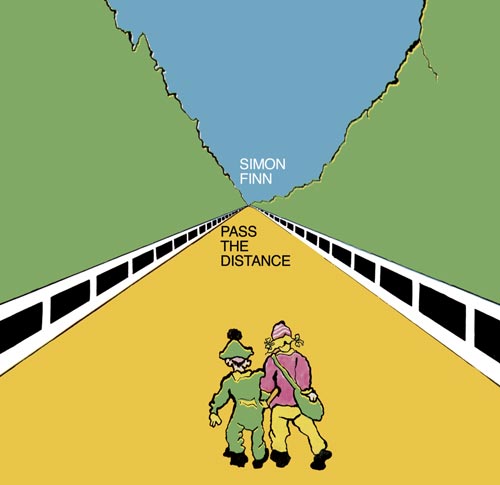
Simon Finn - Pass the Distance (1970)


Listen
Buy

For fans of: Pearls Before Swine, Linda Perhacs, Current 93

This album is dark and psychedelic, with a progressiveness a bit akin to if Can were to try their hand with an acid folk album. It's all barely being held together with a great voice and melodies that wander left and right. Several of these songs show a great power that's somewhat unusual for music of this type, "Jerusalem" being the most notable. It's not the most cohesive album, but it's got some great highs and nicely combines the psychedelia of the decade before this with the progressiveness that was just becoming popular. It also seems to capture an existential longing that few artists are able to match. - Matthew Foster

"Simon Finn's Pass the Distance is a legendary acid folk recording from the psychedelic era. Originally issued on the Mushroom label in 1970, the LP was embroiled in legal hassles and withdrawn from circulation. David Tibet of Current 93 became obsessed with it upon hearing a bootleg copy in 1995, and along with Simon and the Canadian Jnana imprint, has reissued it on Durtro as a CD. Finn, a Canadian native, made the record in 1969 in Vic Keary's Chalk Farm Studios with some new jamming mates including David Toop and Paul Burwell!

Pass the Distance is not a drippy peace and love record. It is a nocturnal, nightmarish album full of extremes as well as aesthetically beautiful textures and subtleties. Finn was obsessed with Christian themes (both redemptive and apocalyptic), history, the environment, and strange, oblique love songs. The centerpiece is the epic "Jerusalem." With maniacally strummed acoustic guitars, a swirling church organ, hand drums, and a muddy bassline, Finn iterates the vision of Christ as he walked through the city and was crucified by the very people who praised his name, and he equates Christ with the 1960s counterculture ideals. The crux of the song is the terror and rage that Christ would feel were he to return and be crucified in the current millennium by those who profess his name. Finn begins softly, sadly, and soon begins ranting and screaming as the music gathers in intensity and menace until it becomes utterly frightening. It is followed by "Where's Your Master Gone," a song about Satan, articulated with Toop's electric guitar lilting in the backdrop with Burwell popping the accents with his tables. Finn croons sweetly and confusingly about the transformation and redemption of Satan. And so it goes -- whether Finn is singing about love found and lost, sex, new age revelation, or Gnostic Christianity; there is in his gentleness, a darker, more sinister edge, one that can set one's teeth to grinding or make one see things in the dark. But there is also great tenderness and vulnerability as well, as evidenced by "Patrice," or "What a Day." Taken as a whole, it is creepy and beautiful and poetic and crazy and utterly wonderful. It is a maverick recording from a time far wilder and more imaginative than our own. The CD contains the ten-track original album, an unreleased single, and two completely unreleased studio tracks -- one of which is a recording of the first song Finn ever wrote. It has extensive liner notes by Finn, Toop, Tibet, and Keary. Pass the Distance is available from either Finn's or the Durtro web sites. While Pass the Distance may not be for everyone, those who dare to step out on to this ledge will be immeasurably rewarded." - AMG

Sunday, September 26, 2010

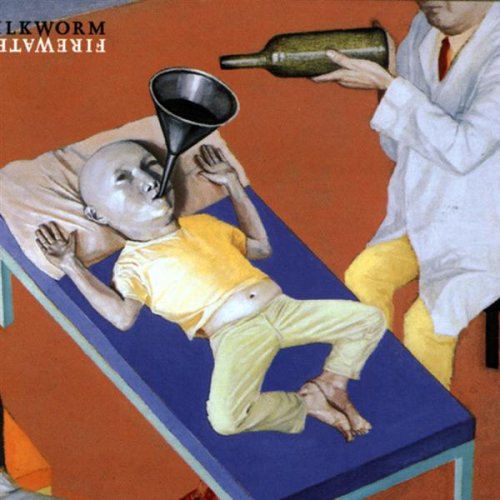
Silkworm - Firewater (1996)


Listen
Buy

For fans of: Pavement, Dinosaur Jr., Mission of Burma

Full of slacker energy, this music doesn't seem to care about having a clean or cohesive sound, but throws ideas around freely and sounds like some of the most natural indie rock there is. They're always on the edge of excellence here, swinging back and forth from really good to great and mustering up some exiting and memorable melodies here and there within each song. Loose guitar solos rage over the top of consistent drums and a meandering bass. It's noisy, honest, and gloriously wide-ranging. - Matthew Foster

"It's a difficult thing to have too many cooks in the kitchen, especially when all of them are iron chefs. Joel Phelps' semi-forced exit made a big difference. On one hand, it was bad: Phelps was an integral part of the band since its inception. And on the other, it was good: the pared-down sound fit the band well, and that's quite evident on the four-sided Firewater. Left to two voices, the band produces its most cohesive and precise set, despite it being their most broad; Firewater clocks in with 16 tracks at an hour long. Not a minute is wasted, and everything sounds more measured and relaxed. Lyrically, the themes of each song tie in with a couple concepts in mind, not suffering from the somewhat schizo topics of previous LPs. As the lone guitarist, Cohen spreads his wings, turning in some lengthy solos. At times, his scorchy leads seem twice as loud as the bass and drums, but it's called for each time. Midgett's thick bass becomes more of a centerpiece than an anchor, sounding its thickest yet. Stripped bare to the degree of sounding awkward on the first few listens, a couple songs rely mainly on light rhythms and little else. The record's themes of alienation and inebriation are balanced by spells of dark humor. Cohen is always reliable for the occasional zinger, and Midgett's woes-of-the-road "Miracle Mile" provides many yuks at the band's expense. Also, the occasional cathartic yelping and complex structures seem to be done away with, in favor of more classic influences (the Stones-y "Lure of Beauty") and decreasing tangential incidents. Though one hates to say it in the wake of Phelps, Firewater sounds like a band that's just lost its training wheels -- fuller yet less cluttered." - AMG

Wednesday, September 22, 2010

Georgia Anne Muldrow - Kings Ballad (2010)


Listen
Buy

For fans of: Erykah Badu, Madlib, Janelle Monáe

This woman's taking neo-soul higher and farther, combining the hip-hop and soul with some fantastic modern beats and instrumentation. If you wish hip-hop had more singing and well-written lyrics, or if you wish soul music had more oompf and funk, this is what you're wishing for. There's a great feeling of experimentation and adventure here that is really inspiring, yet it also has plenty of accessibility and doesn't suffer from over-indulgence. Influences seem to come from anywhere and everywhere, just listening to "Thatch," with it's electronic squeaks and dance beat, I know this is something special. Along with Erykah Badu, this is opening a big door of discovery for me. - Matthew Foster

"Kings Ballad, following Umsindo by only six months and released on Ubiquity instead of her and husband Dudley Perkins’ SomeOthaShip, is Georgia Anne Muldrow's most direct, least idiosyncratic release, if only by a shade or two. Once again, Muldrow the do-it-all provides an organic, modern brand of psychedelic funk, a sample-less fusion of several black music forms that, depending on the song, could provide the backdrop for children playing double dutch or a political rally. Less sprawling than Umsindo (it’s 25 minutes shorter), its centerpiece is the title track, a gracious tribute to family friend Michael Jackson that carries a deep bass rumble, an elegiac organ, and a cascading piano line that enters -- stunningly so -- as Muldrow joyously sings, “We love you, Michael/We needed you, Michael.” The energy is, as ever, uniformly positive, albeit with a spirit that is more commonly playful, as on “Simple Advice” (loaded with so much kinetic percussion that it resembles a go-go band’s warm-up session), “Summer Love” (a lighthearted duet with Perkins over crawling, “Cutie Pie”-like machine funk), and “Room Punk!” (45 seconds of happily throwaway pop-punk). Even the songs packing a message can be enjoyed without deep concentration. Brief instrumentals are interspersed, and they are typically as replay-worthy as the full-blown songs, highlighted by the eerie and cosmic “Industrial Bap.”" - AMG

Saturday, September 18, 2010

Gastr del Sol - Upgrade & Afterlife (1996)


Listen
Buy

For fans of: Tortoise, Bark Psychosis, Slint

Imaginative creativity is put to the forefront here. The songs range from acoustic avant-folk guitar explorations to electronic experiments that are sometimes combined to create lush pieces of hypnotic minimalism. In a conventional sense, they can be somewhat dull, but they successfully rely on dynamic atmospheres that set a dark and wondrous mood. At times it can simply reside pleasantly in the background, or it can creep up on you and amaze with it's unique and intricately crafted post-rock beauty. - Matthew Foster

"Somewhere along the line, Upgrade & Afterlife's original concept -- a set of conventional song made up of "normal" chords and accessible melodies -- must have been abandoned. Instead, David Grubbs and Jim O'Rourke's fifth album as Gastr del Sol abounds with elliptical melodies, broken by silence and noise, that avoid resolution. The antithesis of a pop lyricist, Grubbs' elusive wordplay and vague, surreal imagery matches his music, particularly on "Rebecca Sylvester." Random noise interrupts throughout the album, bursting and seeping through song surfaces, wreaking havoc on the compositions. A fanfare of destructive screeches announces "Hello Spiral." On "The Sea Incertain," they emerge from the stops and starts of the piano's careful explorations, pushing the instrument out of focus and out of the picture. A paranoid hum underpins "The Relay and "Crappie Tactics." There is beauty throughout Upgrade & Afterlife, but it's almost entirely on Gastr's terms. Grubbs' gorgeous vocal melody on "The Relay" carries some of his most cryptic imagery. "Cooked corn in formaldehyde/Popcorn in an airtight jar," he sings, backed by a dissonant piano. The album's biggest surprises are its bookends: "Our Exquisite Replica of 'Eternity'" (an absurd opening statement) may someday be recognized as the perfect piece of film music, capable of communicating as much paranoia, suspense, and terror as a director could with his/her camera. It's an ominous drift fractured by shards of electronic feedback, breaking through and breaking down like static between alien stations before closing with mournful trumpets. Meanwhile, Jim O'Rourke's performance of John Fahey's "Dry Bones in the Valley" ends the album with pure fresh air, resolving every awkward moment offered up in the preceding 37 minutes. Joined by Tony Conrad, the pair embark on an exploration of the violinist's micro-tonal drones that follow the album into the sunset." - AMG

Wednesday, September 15, 2010

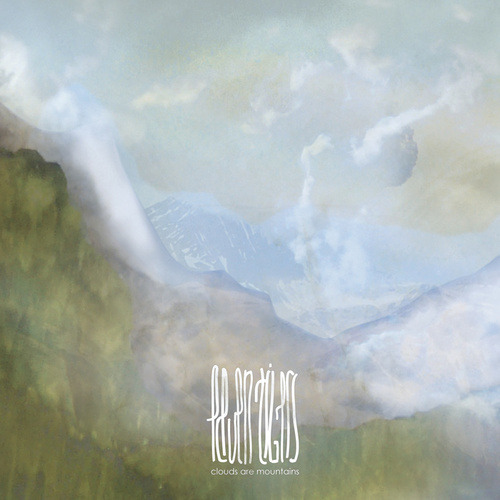
Eleven Tigers - Clouds Are Mountains (2010)


Listen
Buy

For fans of: Burial, James Blake, Scuba

These songs are packed with sound. When one beat begins to die, and you start to fall, there'll be another one waiting to catch you and guide your steps back into motion. It's all done with such grace, it has a great flow, and once I got into it, it never let go. One complaint would be that the sounds could have been produced a bit better, sometimes the mix sounds a bit flat, but if you can get into the variation that's here, it's one hell of a ride. It really explores the dubstep genre in a way few others have, expanding on the atmosphere that Burial introduced with fantastic rhythms that'll make any beat lover happy. Full of energy and innovation, this one should be quite a treat for all the craved dubstep fans. - Matthew Foster

"Breaking with nearly all tradition of its nominal peers, this album has a dramatic heft, an operatic rise and fall structure demanding front to back listening – with the surgical precision of some mythical perfect trance mix to keep everything on a consistently gasp inducing flow. Every time an exquisite groove is discovered and locked into, a new element arises to subtly shift context until a sudden left turn imperceptibly shuffles the entire journey onto yet another new level." - Optimistic Underground

Monday, September 13, 2010

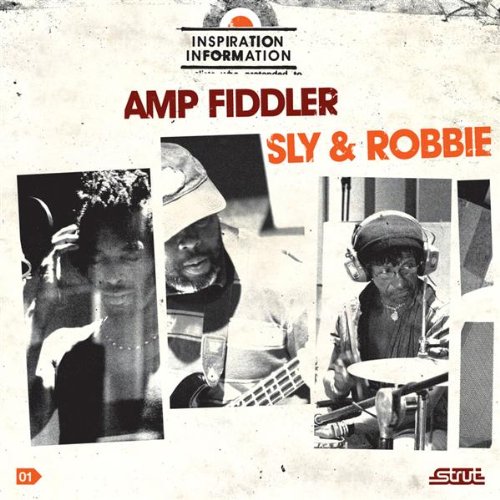
Amp Fiddler/Sly & Robbie - Inspiration Information (2008)


Listen
Buy

For fans of: Erykah Badu, Dâm-Funk, Raphael Saadiq

I've never been much of a soul fan, but recently I've been on a huge Erykah Badu and Sade kick. I came into this album having heard another from the Inspiration Information series and hoping to expand on the little soul I've heard, and I'm enjoying it much more than I could have imagined. The bass is really great in some of the songs here, digging a groove within the groove, and Sly & Robbie's reggae influence adds a really nice element to the music. Amp's soulful voice and the interesting and groovy production make a great combo and results in a very unique sounding and enjoyable set of songs. - Matthew Foster

"Arriving at Anchor Studios in Kingston, Jamaica, armed only with a handful of acoustic vocal ideas, Amp and the Riddim Twins recorded the album in just three days during June with overdubs laid down a week later in Detroit. “We work fast,” says Robbie. “Time is money!” The result is a confident, laid back set that brings a whole new twist to Amp’s trademark vocal style: Sly builds innovative digital and live rhythms, Robbie underpins the tracks with solid bass foundations and original generation guests “Sticky” Thompson (percussion) and Dalton Browne (guitar) add plenty of colour. Back in Detroit, Amp knitted together the finishing touches, adding extra keys and backing vocals.

The tracks are never predictable, at times echoing Sly & Robbie’s ‘80s days with Island Records at Compass Point studios, at others structured around more mood-based keyboard pads and new patterns re-inventing the established dancehall template. “It’s been amazing – the level of musicianship is sky high,” explains Amp. “Sly & Robbie work so well together – everything has happened really smoothly.” Within the sessions, the trio honed both new compositions and covers, including a pertinent re-work of a George Clinton-era classic, ‘Paint The White House Black’ re-titled by Sly as ‘Black House’. They also revisited select tracks from Amp’s ‘Waltz Of A Ghetto Fly’ album from 2004, with Amp favourites like ‘I Believe In You’ re-worked over a lilting reggae base. The album was mixed in London by another original Island Records studio regular, Godwin Logie, complete with extra dub versions of selected tracks worked live off the desk." - Strut Records

Saturday, September 11, 2010

Dean & Britta - 13 Most Beautiful: Songs for Andy Warhol's Screen Tests (2010)


Listen
Buy

For fans of: Spiritualized, Yo La Tengo, Robyn Hitchcock

These songs are indeed beautiful. I haven't heard the originals of the cover songs that are here and I haven't seen Warhol's screen tests, but this stands up as an album greatly. It's spacey, arty, psychedelic, and at times has my spine tingling. They incorporate a wide range of instruments, keeping it from becoming boring, and even add electronic beats and bleeps to some songs. It all works really well and never annoys or tries to go beyond itself, just simple songs that hit the spot perfectly. - Matthew Foster

"Renowned pop artist Andy Warhol swapped canvas for celluloid and made 13 short black-and-white silent films between 1964 and 1966, all of which followed a single subject (person), usually within the confines of his Factory studio. Luna veterans Dean Wareham and Britta Phillips were commissioned by the Warhol Museum to provide a soundtrack for the film, and the resulting two-disc set, 13 Most Beautiful: Songs for Andy Warhol's Screen Tests collects all of those pieces, along with a handful of remixes. Tapping one third of the late-'80s pop outfit Galaxie 500 was a no-brainer, as Wareham’s made a career out of building dreamy, minimalist, Velvet Underground-style jams for over 20 years, and instrumental cuts like “Silver Factory Theme” and “Herringbone Tweed” feel like audio postcards of the late-'60s Factory scene. Phillips’ sexy, plain-jane voice dutifully echoes Nico on a cover of Bob Dylan’s “Keep It with Mine,” Wareham’s “It Don't Rain in Beverly Hills” (for the Edie Sedgwick screen test) rolls down the road on a foundation of spacy beats and blips, and a rousing take on the Velvets’ “I'm Not a Young Man Anymore” feels both sad and triumphant. 13 Most Beautiful ends fittingly with the languid “Sweet Jane” and the Paul America-inspired “Teenage Lightning (And Lonely Highways)”." - AMG

Wednesday, September 8, 2010

Carla Bozulich - Evangelista (2006)


Listen
Buy

For fans of: Swans, Kate Bush, Land of Kush

Carla Bozulich is a sculptor of tension. With her backing band and an incredible voice, these songs rise and fall with a greatly dynamic power. It's a bit like if Kate Bush experimented in noisy post-rock. Much of the music somewhat resembles post-rock in structure and tension, but is much more experimental than any post-rock, using many orchestral instruments in unconventional ways and favoring more folky melodies and influences. The album is beautiful, haunting, and adventurous at the same time and is highly recommended. - Matthew Foster

"Evangelista is a sound that you can open your chest with, pull out what’s inside and make it change shapes. Make it open more times and, even more… til the sound inside has finally sealed the hole where your vile/beautiful heart belongs… loved and safe even when you think you’re totally alone. Even if you believe in nothing. good or bad, I must report: there’s really no such thing as empty space. Even inside this void there is sound. You will hear it. You will see. You will be cradled and near deafened by love and mercy sounds and the sound of your own pulsing blood which used to drive me mad as a child when I would try to go to sleep…" - Carla

Friday, August 27, 2010

Various Artists - Cocoon Compilation J (2010)***


Listen link removed by request.Buy

For fans of: Basic Channel, Thomas Brinkmann, Marcel Dettmann

With the Moritz von Oswald name attached to it, I expected the first track here to be as great as it is, but to my surprise, the rest of what follows is nearly just as incredible. These tracks are packed to the brim with elegance, power, and subtlety. They relentlessly and shamelessly attack the listener with repetition. Deeply hypnotic, these blizzards of beats don't hold back anything and entrance like a great shoegaze album. This compilation features many of today's top notch techno/house producers and is like a bounce house at night with ghouls laughing behind the walls, it's trippy and immensely funky. - Matthew Foster

"When the then still young Frankfurt label Cocoon Recordings discovered the long-playing format with its Compilation A in Summer 2000, probably nobody could have, even approximately, foreseen the success story of this series. For ten years now, the cocoon-style declination of the alphabet is a guarantor for high-class and exclusively produced floor burners by the international Techno and House elite, and, beyond that, a reliable indicator for the stylistic bandwidth of contemporary electronic dance music. And even with the previous editions A to I having set the bar damn' high, the J edition starts with a true musical sensation, as the opener "Cocoon Dark Dub" comes from nobody less than Moritz von Oswald. "Those who – even just rudimentary – have followed the evolution of electronic music over the last twenty years, know about the outstanding importance of von Oswald's timeless classics like "Domina", "M-4" or the whole Basic Channel series. Insofar, "Cocoon Dark Dub" is maybe the nicest birthday present at all, and an absolute honour for our label." (Sven Väth) So, initially, it's the heartbeat of Dub Techno that pulsates through a lonely piano and noise fractals, and club world keeps its breath for a good eight minutes. However, the Compilation J literally puts out all the stops over the following 110 minutes playtime and shows what modern electronic dance music has to offer in these times. Mathias Kaden's intuition for the crowd and location is legendary, his music is both distinctly ambitious and refreshing, and so is his contribution "Rave Strikes Back". The Dial impresario Pantha Du Prince from Hamburg is celebrating crystalline ice dance ("Bolder"), while Cécille label head Nick Curly, with his sensual Tribal House, is feasting the most compact form of Disco Boogie that one can imagine ("Keep On"). With "SBooty", the Kompakt ambassador DJ Koze, also from Hamburg, is flabbergasting the audience by combining virtually incompatible elements. Improvised horn licks are whirring through a flickering resonating body while the bass kick is filling up the tropic ambient air. However, the invariably Cocoon policy to always support interesting newcomers becomes visible in the contribution of Basti Grub from the Rhine Neckar area, whose label Höhenregler is well-known for several musical insider tips in the past. "Sick" is ascending into your brain immediately with its melodic high-frequency hook line and mysterious vocals, matching perfectly to the melancholic playfulness of the tracks by Guy Gerber. Deep Dish member Ali Shirazinia aka Dubfire and the Parisian Popof are the ones to prove impressively that you virtually can't go wrong with stringent Hypno Techno and a diaphragm-shaking bass drum. Besides the above-mentioned, the J compilation holds such well-known producers like Loco Dice, Extrawelt, Reboot and last not least long-time Cocoon companion Ricardo Villalobos, whose 12-minutes-long dance on the echo-filled "Humusweg" once again draws the bow to the Basic Channel sound from another side, and leaves much room for own visions in between the pulsing metronome of the bass line. In any case, the history of electronic dance music has not been outtold so far." - Cocoon Recordings

Thursday, August 26, 2010

Arandel - In D (2010)


Listen
Buy

For fans of: Moritz von Oswald Trio, Redshape, Pom Pom

Like that of Burial before 2008 or Pom Pom, Arandel's identity is shrouded in mystery. Also like that of those two artists, Arandel's music is super-contemporary and acknowledges what came before it to create something that can only exist in the 21st century. In D is a reference to the classical minimalism of In C. The album is a minimal techno album in sound and feel, but was carefully created organically with analog synths and real instruments including strings, horns, percussion and vocals, and is much more an avant-garde album in attitude. For something that has an appreciable classic beauty and the ability to make you move ecstatically, this is perfect. - Matthew Foster

"ARANDEL is a secret entity whose only function is to let the music take centre stage. Arandel is a proposal for variations “IN D” - a nod to Terry Riley’s seminal In C and to the American Avant-Garde scene.

+Arandel is a political commitment, the quest of an authentic and organic sound.

+Arandel is a sound dogma, where the rules are deliberately strict – only resorting to his own recordings (no MIDI, no plugins, only analog synths), only his own instruments.

+Arandel is an experimental hub, where creation stays flexible. A Contemporary Classical Music in the broad sense of the word, with no stylistic boundaries. An original concept, a whole unheard-of sound." - Arandel

Friday, August 13, 2010

Terre Thaemlitz - Soil (1995)


Listen
Buy

For fans of: GAS, Thomas Köner, Alva Noto

In this fast-paced modern world where information is instant and everything we do seems to be for a greater good, Soil will allow you to return to the core of yourself in a way few ambient albums can. These six tracks contain a variety of electronic effects and recordings that will relax the body, but challenge the mind. The recordings include radio transmissions, militaristic chants, and an episode of domestic violence, and when combined with the spacey ambient textures, can be like viewing human life from some kind of an isolated bubble. More than your average music, this is an introspective experience and response to this political world. - Matthew Foster

"A flowing, shifting, almost timeless statement incorporating equal parts confusion and calm across six tracks of entirely beatless ambient. Thaemlitz' ability to infuse elements of immediacy and physicality into a measured, slowly evolving style traditionally bogged down by either disinterested elitism or faux collectivist spirituality figures him as one of America's most important contemporary composers, and a singular voice in new ambient." - AMG